
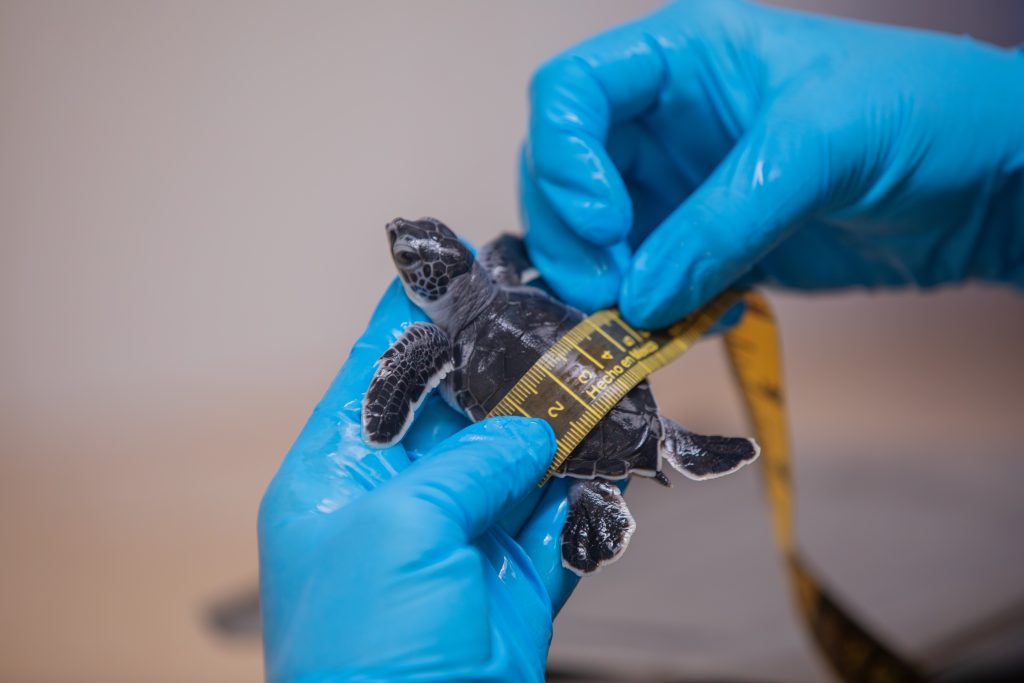
Operated by Flora, Fauna y Cultura de México, A.C., with the ongoing backing of Grupo Xcaret and the support of other partners, the program protects 13 of Quintana Roo’s most important sea turtle nesting beaches through various turtle conservation camps.
Quintana Roo, December 12, 2025. Having completed 30 years of operation, the Riviera Maya – Tulum Sea Turtle Conservation Program is celebrating a major milestone in 2025: the birth and journey to the sea of over 20 million hatchlings across the camps and beaches it has protected since 1996. This achievement confirms the program—operated initially by Grupo Xcaret (1996–2002) and subsequently by Flora, Fauna y Cultura de México, A.C. (since 2002)—as one of the most significant and enduring conservation initiatives in both the Mexican Caribbean region and the country as a whole.
Through various turtle conservation camps strategically located along 120 km of coastline, the program protects 13 key sea turtle nesting beaches on Quintana Roo’s central coast. Between 1996 and 2025, the program has protected 303,586 nests and overseen the hatching of 20,364,302 turtles. The majority belong to the green turtle (Chelonia mydas, 81%) and loggerhead turtle (Caretta caretta, 18%) species, though there are also records of hawksbill turtles (Eretmochelys imbricata) and even leatherback turtles (Dermochelys coriacea)—the latter being a species that typically nests in other regions of the country.
The program serves as a national and international benchmark, consistently generating a significant impact across various areas of work, including the protection of beaches, nesting females, hatchlings, and nests; research; environmental education; and technical training for turtle conservationists from across the country. These results are made possible by the ongoing support of Grupo Xcaret, whose donations cover a significant portion of the program’s operations and other initiatives driven by Flora, Fauna y Cultura de México. This non-profit civil association works to conserve key species and ecosystems and fosters community development and well-being in Quintana Roo through Parque La Ceiba, the La Ceiba Chemuyil Community Center, and the Ecoludoteca Tulum.

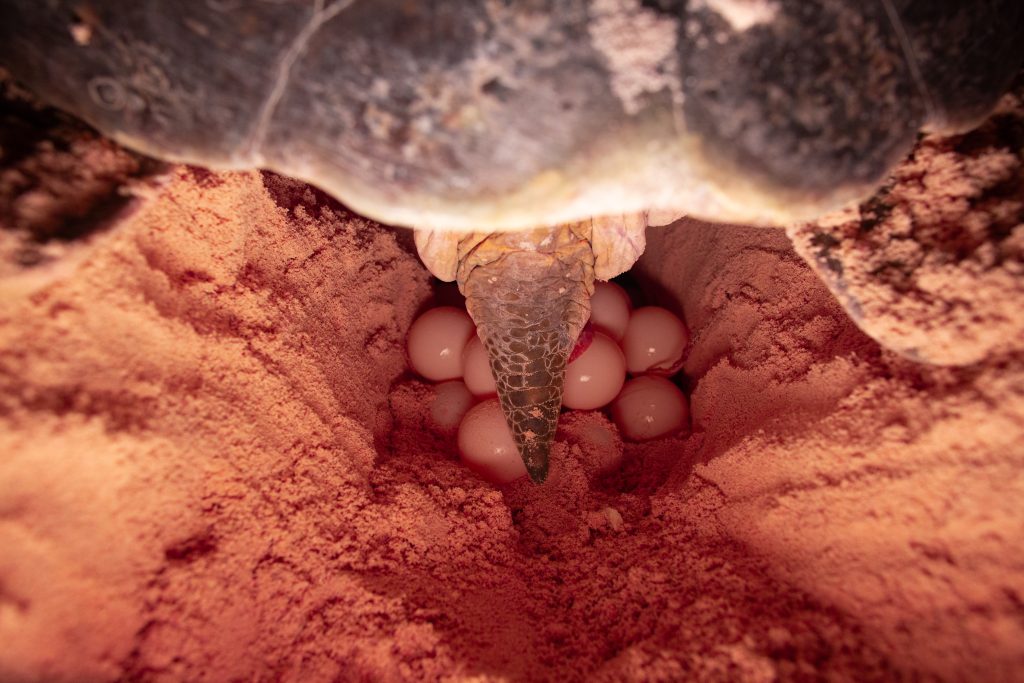
“Sea turtles are key species facing the threat of extinction. Protecting them not only aids in their preservation but also contributes to the ecological balance of oceans and beaches, as well as the sustainable prosperity of coastal communities,” commented Lupita Quintana, General Director of Flora, Fauna y Cultura de México, A.C.
To carry out its operations, the program relies on a team of sea turtle protection professionals and has also engaged nearly a thousand volunteers from across Mexico and the world over the years; these individuals have dedicated their time, talent, and energy to protection and monitoring efforts at the camps.
“Grupo Xcaret celebrates the achievement reached by Flora, Fauna y Cultura de México. Protecting over 20 million sea turtle hatchlings is a milestone that seemed distant two decades ago. This result demonstrates what can be achieved when conservation work is grounded in rigor, continuity, and long-term commitment,” stated Iliana Rodríguez, Corporate Director of Sustainability and Institutional Dialogue at Grupo Xcaret.
Collaboration has been instrumental in reaching these figures. The combined efforts of civil society, the private sector, the government, and foundations have enabled steady progress in the conservation of threatened species and generated results with a lasting impact, confirming what can be achieved through the building of alliances. Thus, in addition to the support provided by Grupo Xcaret, the program has also benefited from the backing of other partners and donors, including SEMARNAT, CONANP, IBANQROO, the Quintana Roo State and Municipal Sea Turtle Committees, Hotel Nueva Vida de Ramiro, Hotel Bahía Príncipe and its Eco-Bahía Foundation, Hotel Hilton Chemuyil, and Grupo Lomas.
“This achievement reflects the power of collaboration; the operations of Grupo Xcaret’s parks contribute to this shared effort, demonstrating that responsible tourism can be a positive force for conservation,” noted Emma Dietz, Director of Operations for Nature Parks and Xel-Há.
Every turtle that reaches the sea is a symbol of hope and a reminder that when civil society, the private sector, and authorities join forces, the results can transform entire ecosystems. This achievement is also an invitation to continue working together, as every season, every nest, and every hatchling represents a real opportunity to build a more balanced and sustainable future.